
To ensure perfect and error-free operation of the washing machine, it is necessary to keep it in excellent working condition. This means constantly checking its condition and carrying out periodic cleaning. However, the question often arises about the optimal mode of cleaning the machine and how deep it is necessary to get into its device. Fortunately, to clean an automatic washing machine, you do not need to know how to disassemble this equipment or its components. Manufacturers make this process affordable and provide simple and affordable cleaning products. Let’s consider how to clean an automatic washing machine.
What exactly to clean in the machine
To ensure proper and trouble-free operation of the washing machine, it is important to regularly clean certain components. Here is a list of items that should be checked and cleaned periodically to keep your machine in optimal condition:
- Detergent tray: The tray is constantly contaminated with powder and other detergent residues. Dried residue can be difficult to remove, so it’s important to clean the tray regularly to prevent contamination.
- Drum: The drum of the machine, as well as its blades and relief elements that help to stir the laundry, can be covered with scale, salt or lime deposits. This can lead to the appearance of an unpleasant smell and contamination of the washed items. Regular cleaning of the drum will help keep it clean and prevent trouble.
- Drain filter and drain hose: The drain filter is usually clogged with dirt, hair and other particles, which can cause water drainage problems. Regular cleaning of the filter and checking of the condition of the drain hose are important to ensure the proper operation of the machine.
- Heating element (HE): The heating element can become covered with scale or lime deposits, which reduces its efficiency. Cleaning the heater will help ensure efficient water heating and prevent problems with washing.
- Rubber seals: The rubber seals that provide a seal between the drum and the machine body can become covered with scale and salt deposits. This can lead to the deterioration of their functions and the appearance of leaks. Regular cleaning of rubber seals will help keep them in good condition.
It is important to remember that any work related to manual cleaning of machine parts or its disassembly must be carried out with the power cable disconnected for safety.

Washing machine powder tray
The powder tray of the washing machine should be washed and cleaned as often as possible, ideally every 2-3 washes. This will help to avoid contamination of the channels and powder deposits on the walls of the tray.
In most models of washing machines, the tray is easily detached from the body:
- In the case of machines with horizontal loading, it is enough to fully extend the tray, lift it by the edge and pull it towards you, slightly upwards. There may be latches marked with special icons showing where and how to press.
- For vertical loading machines, the tray can be mounted on the lid and held by latches on the sides or mounted on the side from the window to the drum. In the first case, it is enough to hold the tray with one hand so that it does not fall off, and separate all fasteners. In the second case, the tray must be washed on the spot, and the water will flow into the drum compartment.
To clean the tray, it is usually not necessary to use special detergents, since there is already a sufficient amount of washing powder. You can add a little dishwashing detergent to a sponge or a rough washcloth to speed up the process. Wipe all accessible surfaces of the tray with a sponge, and use a brush for the interior.
Then rinse the tray thoroughly with plenty of running water. The compartments of the tray have channels through which the powder enters the machine, so it is important to provide a strong stream of water for high-quality washing.
By following these simple steps, you will ensure that the powder tray is properly cleaned and your washing machine will perform better.
Clean from scale
Cleaning the automatic washing machine from scale is an important procedure that should be performed periodically. The frequency of cleaning depends on the quality of the water, the washing mode and the frequency of use of the machine. Usually, it is recommended to carry out cleaning about once every 3-4 months, but not less often than once every six months.
Various means can be used for cleaning:
- Special anti-scale products.
- Citric acid.
- Vinegar.
All these products are effective, but it is important to consider that special products may contain additional additives to protect surfaces from scale and support rubber seals. The easiest and safest way to clean an automatic washing machine is with citric acid.

The cleaning process is simple:
- Add half of the usual amount of washing powder to the drum.
- Add two sachets of citric acid (200 g) or two glasses of vinegar (400 ml, 9% solution) or use antinakipin according to the instructions.
- Start the washing machine in the washing mode without clothes with a water temperature of 70-90°C.
- At the end of the cycle, repeat the rinse.
If your car does not have a special mode without clothes, you can add a minimal amount of things, for example, old work clothes that do not hurt. In this case, it is important that the number of things is minimal to avoid residual dissolved salts or lime.
By performing this procedure regularly, you will keep the drum and heating element of the washing machine in good condition, get rid of scale and deposits, and support its efficient operation.
Cleaning from slag, silt and dirt
Cleaning from slag, sludge and dirt in a washing machine can be a more difficult task. There are hidden places in the drum that are hard to reach and cannot be completely cleaned with normal washing.
The fins around the circumference of the drum are usually removable and have hollow spaces inside. It is there that slag and silt can accumulate. According to the instructions for the machine, these elements must be opened and cleaned manually.
The easiest way to clean the elements of an automatic washing machine is to find a pan or a metal bucket of the appropriate size and boil them in a solution of citric acid with the addition of two or three spoons of table salt.
This will help with some of the pollution. Then the parts should be washed under running water with a sponge. In the case of serious contamination, special products that are commonly used for cleaning sanitary ware and toilets, including a solution of hydrochloric acid, may be required.
Be aware of safety and use protective equipment such as gloves and a mask. Ventilate the room to avoid inhalation of harmful vapors and to ensure the safety of the body.
Cleaning rubber seals
Cleaning rubber seals is an important part of washing machine care. Rubber seals are located around the door and around the perimeter of the entrance window, which gives access to the drum. They should be wiped regularly, even during routine cleaning of the bathroom or kitchen. To do this, you can use dishwashing detergent, window cleaner or mild non-abrasive detergents designed for tiled, glass and enameled surfaces.

Although there are special products for cleaning rubber seals, they are not required for washing machines. It is only important to regularly check the seals and clean them of powder residues. Even with rare use of the washing machine, problems such as drying out of the rubber are not terrible. Simply keeping the seals clean will help keep them in good condition.
Clean the filter
Starting from the previous work, it is important to clean the filter of the washing machine. The filter is usually located on the front side of the washing machine near the floor, behind a large round or square hinged door. To open the door, press the latch at the top until you hear a click and then pull it back until the lid opens.
The filter is completely removable, usually it can be quite dirty or covered with plaque. It may take effort to unscrew the filter, but you should pull it towards you when you are sure that the threaded connection is completely unscrewed.
The filter should be washed under running water using a sponge and washing powder or dish detergent.
It is also worth washing the place where the filter is located. In the depth of this compartment you can see the pump blades. If there is dirt or threads or other foreign objects on them, they should be carefully removed.
The filter goes back into place and the door closes again.
Conclusions
Correct and regular cleaning of the washing machine is an important aspect of its efficient and long-lasting operation. In this article, we have covered several key aspects of washing machine cleaning, such as cleaning the powder tray, drum, rubber seals, filter and other components.
Regular washing of the powder tray and cleaning of powder residues is important to prevent unpleasant odors and contamination. Cleaning the drum from scale and dirt, as well as cleaning the parts that contribute to the mixing of laundry, help ensure high-quality washing and avoid unpleasant odors.
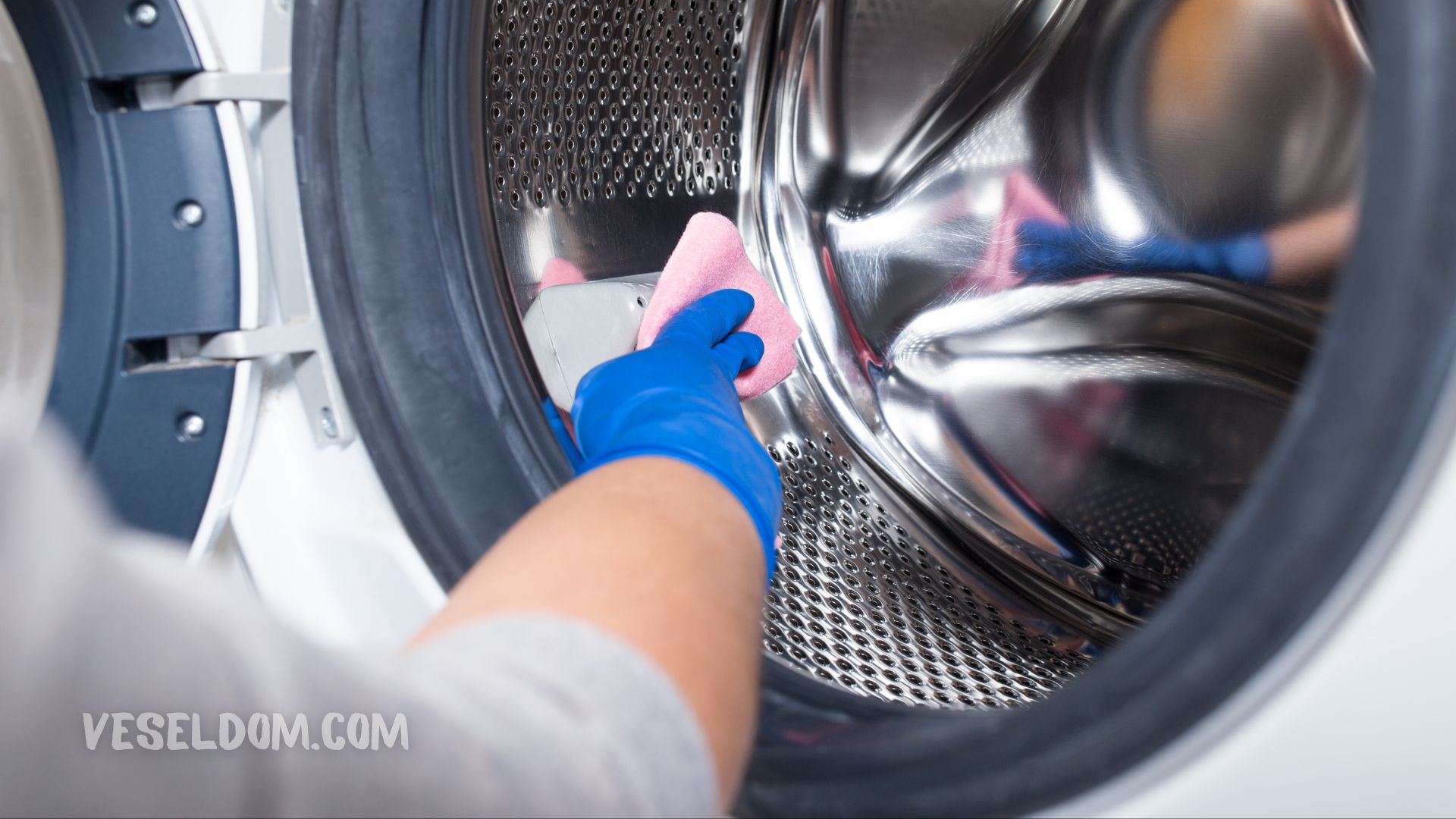
Cleaning the rubber seals of the machine is necessary to ensure tightness and prevent damage to the rubber. Cleaning these seals carefully with a mild detergent will help keep them in good condition.
In addition, the filter of the washing machine should be cleaned regularly, as it collects dirt and other particles during washing. Washing it will help to ensure smooth operation of the machine and prevent clogging of the pump.
In general, regular cleaning of the various components of the washing machine will keep it in excellent working condition, ensuring efficient washing and preventing possible problems. Remember to follow the manufacturer’s instructions and use the appropriate cleaning products. This will help you enjoy the flawless operation of your washing machine for longer.