
Stretch ceilings have long been popular among owners of residential and commercial premises. Stylish appearance and many design options make them popular in modern interior design. In addition to aesthetic benefits, stretch ceilings can also serve a practical function, masking the shortcomings of the main ceiling and providing an additional level of insulation. However, to keep stretch ceilings in perfect condition for a long time, it is important to regularly take care of their cleanliness. In this article, we will look at effective and safe methods of how to wash a stretch ceiling, and we will give you practical tips to preserve its durability and flawless appearance.
Nuances you should know about
Before you start cleaning the stretch ceiling, you should know some facts that can affect your safety and the final result of cleaning.
Stretch ceiling material:
- Stretch ceilings can be made of PVC, textile or polyester. Each of these materials has its own characteristics, and the right choice of cleaning agents depends on the type of ceiling. For example, a PVC coating may be more resistant to contamination, while a textile ceiling may require a more careful approach.
- When choosing a cleaning solution for washing PVC coating, it is better to give preference to non-aggressive products that do not contain abrasive particles or strong chemicals.

- When washing textile stretch ceilings, it should be taken into account that textiles can be more vulnerable to the influence of water, so it is necessary to wash with care.
- In the case of textile stretch ceilings or other materials that may react negatively to moisture, it is recommended to use a waterless washing method. To do this, you can use special waterless cleaning solutions and soft microfiber wipes that will effectively remove dirt without damaging the ceiling material.
- Polyester ceilings, on the other hand, can have more stable protection against moisture, but still require special attention. They can be washed with a soft sponge and safe cleaning solutions.
Safety equipment:
- Before starting to wash the stretch ceiling, make sure that all electrical appliances that may come into contact with water or detergents are turned off or disconnected from the power source. This reduces the risk of damage to electronics and ensures your safety during washing.
- Do not allow smoking indoors during the stretch ceiling washing process. Using detergents and water when cleaning the ceiling can create a cloud or vapor that contains a variety of chemicals. Smoking in such conditions may cause an ignition or fire hazard. Also, smoking during washing can negatively affect the quality of washing and contaminate the ceiling surfaces with additional particles of smoke or ash.
Importantly! The prohibition of smoking while washing the stretch ceiling is a preventive measure to ensure safety and avoid the danger of fire or other negative consequences.
List of things that will be needed
To wash stretch ceilings, you will need the following things and tools:
- Mild detergent or mild soap.
- Vinegar (optional): Vinegar can be used to remove stains and yellowing from stretch ceilings. Usually, several tablespoons of vinegar are added to a liter of water.
- Liquid detergent with ammonia (optional): Certain liquid detergents with ammonia can be effective in removing stubborn stains.
- A soft sponge or microfiber cloth.
- Warm water: for diluting detergents and washing the ceiling.
- Dry, clean sponge or vacuum cleaner: for preliminary cleaning of the ceiling from dust and cobwebs.
- Rubber gloves: protect your hands from chemicals and dirt.
- Underlay or protective film (optional): to protect the floor and furniture from splashes of detergents.

What can be used to wash stretch ceilings
For washing stretch ceilings, it is recommended to use safe and non-aggressive means that do not damage their surface. Here are some effective remedies you can use:
- Simple warm water with a mild detergent such as mild soap or a special detergent for stretch ceilings is one of the safest and most effective options for cleaning the ceiling.
- Vinegar. Vinegar diluted in water can be an effective means of removing stains and yellowing. Usually, a few tablespoons of vinegar per liter of water is enough. However, before use, it is recommended to conduct a test on an invisible part of the ceiling to make sure it is safe for the material.
- Ammonia detergent: Certain ammonia detergents can be effective at removing stubborn stains, such as yellowing or smoke stains. It is worth noting that products with ammonia should be used carefully, as they can have a chemical smell.
- Special detergents for stretch ceilings. They have a safe composition, do not contain aggressive substances and are designed for effective removal of impurities.
Regardless of which product you choose, you should use a soft sponge or microfiber cloth for washing to avoid damage to the material. Always test the cleaning solution on an inconspicuous area of the ceiling before using it on a larger area to ensure its safety and effectiveness.
Step-by-step instructions for washing the stretch ceiling
Before washing the stretch ceiling, make sure you have all the necessary tools and materials and follow the correct sequence of actions:
Step 1: Preparation
- Turn off electrical appliances near the ceiling for safety when washing.
- Protect the floor and furniture in the room with a mat or a protective film to avoid splashes of detergents on them.
Step 2: Preliminary cleaning
- Use a dry, clean sponge or a wood-type vacuum cleaner to remove dust, cobwebs, and other light dirt from the ceiling.
Step 3: Preparation of the cleaning solution
- Depending on the material of the ceiling, prepare a cleaning solution. For PVC ceilings, you can use warm water with a mild detergent or mild soap.
- If there are stains or yellowing, you can try a solution of water and vinegar or a solution of water and liquid detergent with ammonia. However, before using such a solution, be sure to do a test on an invisible part of the ceiling.
Step 4: Washing the ceiling
- Dip a soft sponge or microfiber cloth into the prepared cleaning solution and wring it out to avoid excessive wetting.
- Begin cleaning the ceiling by moving the sponge or cloth along the ceiling panels or from edge to edge. Do not press too hard to avoid damaging the material.
- If there are seams, clean them carefully, avoid excessive moisture, as moisture can cause the seams to stretch.
- If you have a textile or polyester ceiling, use a waterless cleaning method, using only a soft sponge or microfiber cloth without water or solvents.
Step 5: Removing stains and yellowing (if necessary)
- If there are stains, dirt or yellowing on the ceiling, gently apply a small amount of cleaning solution (with vinegar or ammonia detergent) to them using a soft sponge or cloth.
- Let the product work for a while, and then gently wipe the contaminated area again with a soft sponge.
- Make sure that the removed products are completely washed away using a clean sponge or tissue with water.
Step 6: Wash sequence
- Wash the ceiling from clean areas to dirty areas to avoid spreading dirt to clean areas.
- Finish washing the entire ceiling, make sure all dirt is removed, and allow the surface to dry.
Step 7: Check and Finish
- After washing, inspect the ceiling to make sure that all dirt has been removed and that there are no visible traces of cleaning agents.
- Allow the ceiling to dry completely before turning on electrical appliances and moving furniture back into place.
By following the correct sequence and a careful approach, you will be able to effectively and safely wash the stretch ceiling, keeping it clean and attractive for a long time.
Preventing damage during washing
Washing stretch ceilings is an important procedure for preserving their original appearance and durability. During washing, certain measures should be followed to prevent possible damage.
- Avoiding high temperatures and sudden changes in climate, as this can cause deformation of the material. It is forbidden to use steam, hot water or other sources of high temperatures during washing. It is also not recommended to wash the ceiling during the hot time of the day, when the air temperature is at its maximum. By following this rule, you will avoid deformation and damage to the stretch ceiling.
- Do not place any heavy objects on the surface of the stretch ceiling, even on a temporary basis. Excessive pressure can lead to deformation of the material, the formation of irregularities or even a breakthrough. If it is necessary to work at height, provide a protective barrier between the ceiling and the tools to avoid possible damage.
Remember that careful and careful treatment of the stretch ceiling will help maintain it in perfect condition and preserve its attractive appearance for a long period of time.
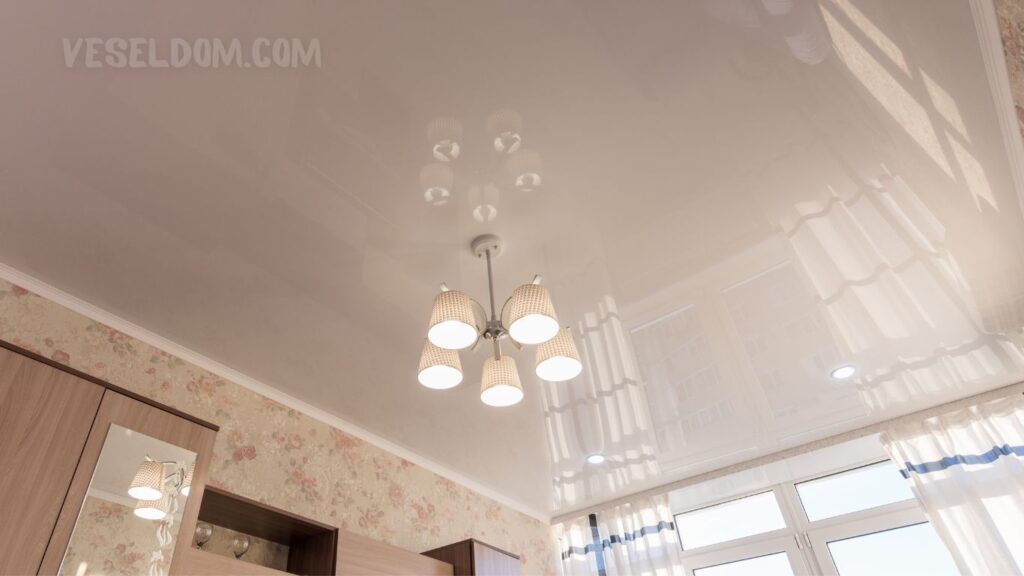
Recommendations for regular care
Regular maintenance of stretch ceilings is a key factor in maintaining their attractive appearance and long durability. Here are some recommendations to help you keep your stretch ceilings in perfect condition.
- The periodicity of washing stretch ceilings depends on the conditions of their use and the degree of contamination. Usually, it is recommended to wash stretch ceilings at least twice a year. However, if you notice stains or other contamination, washing should be done immediately. It is also worth considering the recommendations of the ceiling manufacturer regarding the frequency of cleaning and the use of certain detergents in order to avoid possible damage.
- In case of severe contamination, yellowing or damage to stretch ceilings, it is better to contact professionals. Stretch ceiling care professionals have the experience and knowledge to clean, restore or repair your ceiling efficiently and safely. Do not self-medicate problems, as improper or unqualified washing can lead to irreparable damage.
Keep documents with the manufacturer’s instructions for the care of stretch ceilings and follow the recommendations of professionals for difficult cases. Regular and proper care will allow you to enjoy the cleanliness and attractive appearance of your stretch ceiling for many years.
Conclusions
Washing stretch ceilings is an important procedure that helps preserve their original shine and attractive appearance for a long time. Proper care of stretch ceilings not only adds to their aesthetic appeal, but also extends their service life. To successfully wash stretch ceilings, you should follow some important tips:
- Pre-clean the surface to remove dust and cobwebs before the main wash.
- Determine the material of the stretch ceiling before cleaning, as different materials may require different cleaning methods.
- Use a soft sponge or microfiber cloth to clean the ceiling safely.
- Avoid using aggressive detergents that can damage the ceiling surface.
- Avoid smoking and using fire during the washing process to ensure safety.
- Avoid exposure to high temperatures and sudden climate changes on the ceiling during washing.
- It is recommended to wash stretch ceilings at least twice a year, and in case of contamination – immediately.
- In case of severe contamination or damage, it is better to contact professionals for effective and safe care of the ceiling.
By following these tips, you will keep stretch ceilings in a clean and attractive condition, as well as extend their service life.
Sources:
- “Cleaning and Maintenance Guidelines for Stretch Ceilings,” Barrisol, https://barrisol.com/docs/Barrisol_cleaning_and_maintenance_guidelines_EN.pdf
- “Care & Maintenance of Stretch Ceilings,” Ceiling Pro International, https://www.ceilingpro.com/wp-content/uploads/2021/02/Care-and-Maintenance.pdf
- “How to Clean and Care for Your Stretch Ceiling,” The Stretch Ceiling, https://thestretchceiling.co.uk/how-to-clean-and-care-for-your-stretch-ceiling/
- “How to Clean and Maintain Your Stretch Ceiling,” Lancko Stretch Ceilings, https://lancko.com/en/cleaning-instructions/
These sources provide information and recommendations on cleaning and care for stretch ceilings from leading manufacturers and specialists in the industry. They are a reliable source of information to help maintain stretch ceilings efficiently and safely.