
The cozy atmosphere in the apartment depends not only on well-thought-out furniture and quality repairs, but also on a comfortable microclimate, which must be constantly maintained in optimal condition. But what exactly is meant by microclimate? What factors does it consist of? And how to optimize the microclimate in the apartment?
The microclimate in the apartment includes the following factors:
- Temperature of air and surrounding surfaces: the ideal range is between 22 and 25 degrees Celsius.
- Relative humidity: the optimal value is 45-50%. Air that is too dry can cause discomfort and drying of the mucous membranes, while air that is too humid promotes the growth of harmful bacteria and microorganisms.
- Constant air exchange: it is important to ensure the flow of fresh air and the removal of polluted air. The recommended air flow rate is 30 cubic meters per hour.
- Clean air: regular ventilation and air purification ensure a fresh and healthy microclimate.
- Absence of drafts and stagnant places: the speed of air flow should be no more than 0.2 meters per second in winter and up to 0.5 meters per second in summer to avoid heat dispersion and discomfort.
- Low noise level: the recommended noise isolation is 30-40 decibels.
The main difficulty lies in the fact that these characteristics of an optimal microclimate are interconnected and influence each other. For example, an increase in temperature can lower the relative humidity, and an increased air exchange can lead to drafts, while a reduced air exchange can cause a gradation of air temperature.

In case of air stagnation, especially in winter, the temperature near the floor can differ by 3-5 degrees Celsius from the temperature under the ceiling, or it can be even higher.
It is also important to note that sound insulation, which separates the room from noise from the street, is a separate parameter. However, even sound insulation must be considered with certain limitations. Complete sealing can affect natural ventilation with all the consequences. In addition, sound insulation is often combined with insulation of walls, windows and doors.
The state of the atmosphere in the house and the choice of parameters have a great influence on a person. If all parameters are normal, then a person feels good. However, if the temperature is too high or too low, discomfort already occurs. The same applies to humidity, but with more harmful consequences. Low humidity can cause dryness of the mucous membranes of the nose, eyes and skin, while high humidity promotes the active reproduction of harmful bacteria and microorganisms. Drafts also have a harmful effect on the microclimate, and should be avoided.
So, to create a comfortable microclimate in the apartment, it is recommended:
- Regularly ventilate the room, ensuring constant air exchange. Open the windows for a few minutes several times a day to let in fresh air.
- Use thermostats that allow you to maintain the optimal temperature in the apartment.
- Install a hygrometer to monitor air humidity. Depending on the needs, you can use humidifiers or dehumidifiers.
- Keep the room clean. Clean regularly, remove dust and dirt to prevent air pollution.
- Pay attention to sound insulation. Consider installing soundproofing materials on walls, windows, and doors to reduce street noise penetration.
- Control humidity levels in the bathroom and kitchen, where more moisture tends to form. Installing exhaust systems can help avoid overhumidification.
Providing a comfortable microclimate in the apartment will help create a cozy and healthy environment for you and your family.
Basics of building a microclimate
So how to do it? How to control the microclimate? The main idea is that all parameters are regulated naturally with minimal human intervention, while not allowing any of them to change too actively and frequently.
Ventilation
The effectiveness of natural ventilation is to constantly ensure the inflow of fresh air into the apartment and the removal of used air through exhaust holes in the kitchen and bathroom. However, the main challenge for natural ventilation and microclimate in modern apartments is hermetic plastic windows. Therefore, it is mandatory to install ventilation valves or ventilation channels next to window openings to ensure normal air exchange with the outside environment.
To prevent the penetration of dust and fluff from the street, the ventilation gaps can be equipped with filters.
It is also important to have gaps between the floor and interior doors or ventilation slits in the door itself to ensure the unhindered movement of air from the windows through the corridor to the ventilation ducts.

Ventilation ducts are designed to create a natural flow of air from indoor spaces to the outdoor environment. However, this system does not always work effectively. For example, in high-rise buildings, starting from the fifth or sixth floor, problems with air flow may occur, since excessive ventilation loading from the lower floors can lead to reverse air flow inside the room. In such cases, it may be necessary to install an adjustable fan that will provide the required level of air exchange.
If possible, it is recommended to install a forced ventilation system with distribution over ventilation channels and preliminary air preparation. This is the most effective equipment for providing a comfortable microclimate, as it is able to simultaneously solve such tasks as heating, cooling, humidity maintenance, air purification, while being more efficient and economical. However, it is worth considering that such a system can be more expensive.
Temperature
The temperature in the apartment directly depends on high-quality and correct thermal insulation. It ensures preservation of heat in winter and avoidance of overheating in summer. The heating system is responsible for heating, and air conditioners for cooling. It is possible to describe all the patterns and principles of heat distribution in the apartment in great detail, so it is better to allocate a separate article where it will be considered in more detail. Here we will limit ourselves to listing the important points.
The efficiency of heating and cooling systems should be calculated taking into account proper ventilation and air exchange. It is unacceptable to use room sealing as a way to preserve heat.
The location of the heating radiators, the configuration of the underfloor heating and the distribution of the pipes should ensure the uniform distribution of heat throughout the room by convection and avoiding the formation of drafts. Heating radiators must cover the entire area under the window openings to create a thermal curtain.
Wall insulation should be done from the outside to avoid freezing of the walls and the formation of a dew point inside the room.
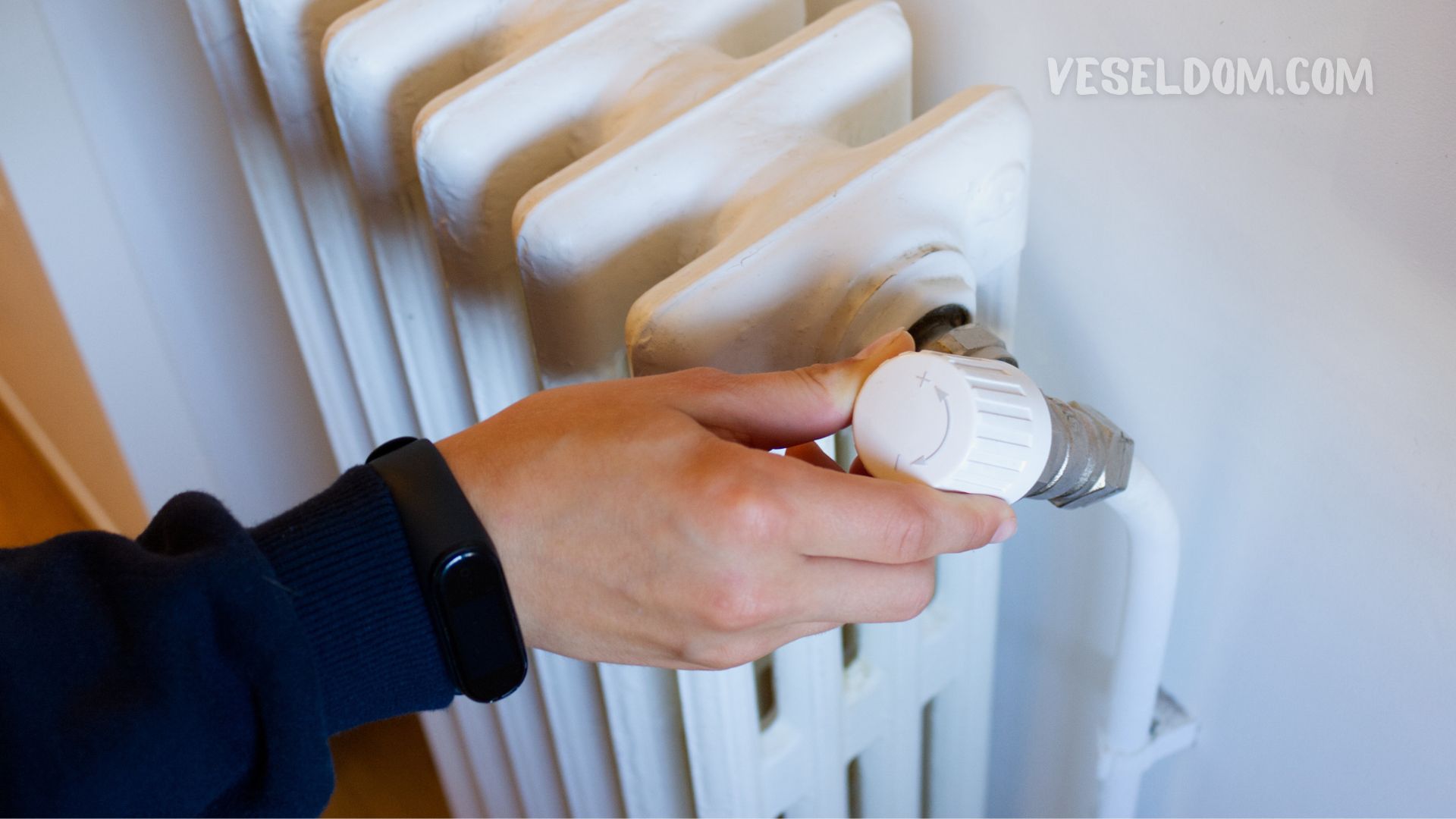
The heating system must be adjustable. It is inappropriate to create overheating, because active ventilation of the room is the only way to ensure a comfortable temperature.
It all boils down to the fact that the temperature in the apartment depends on many factors and is maintained taking into account all other parameters of the microclimate. Correct thermal insulation, location of heating radiators, configuration of the underfloor heating system and regulation of the heating system are important aspects to ensure a comfortable temperature in the apartment.
Humidity
It is necessary to remember that to maintain a comfortable microclimate in the apartment, relative humidity is important, not absolute. Relative humidity defines the moisture content in the air as a percentage, while absolute humidity is measured in grams per cubic meter.
Relative humidity depends on temperature. For example, if the relative humidity is 50% at a temperature of 25°C, then when the temperature drops by 5°C, it will be approximately 68%. If the temperature rises by the same 5°C, the humidity will be approximately 36%.
To ensure normal humidity, which is 45-50%, it is important to avoid sudden changes in temperature.
Another important factor is the flow of fresh air. In winter, when the cold air is heated indoors, it loses its moisture, which can lead to overdrying of the air inside. In summer, the reverse process occurs, but with one additional factor: in hot weather without precipitation, the air can contain very little moisture.

To maintain normal humidity, air humidifiers are usually used, which add water vapor to the room. Otherwise, active ventilation can help remove excess moisture from the apartment.
Clean air
The air in the apartment constantly accumulates a lot of pollution. These can be dust, particles of dead skin, pet hair, carbon dioxide released when breathing, microscopic droplets of fat and smoke particles generated in the kitchen during cooking. The constant movement of air in the apartment helps raise dust into the air, which can make breathing difficult. Several methods can be used to clean the air in the apartment:
- Air replacement using a ventilation system: This is a method of actively removing polluted air and supplying fresh air from the outside. Regular air exchange helps maintain the chemical composition of the air and the proper levels of oxygen and carbon dioxide.
- Air Filtration: Using filters helps keep dirt, dust, and other harmful particles in the ventilation system or near the outlet vents. This helps to improve the air quality in the apartment.
- Regular cleaning: Regular wet cleaning and vacuuming of all surfaces in the apartment plays an important role in reducing the level of air pollution. This helps keep dust and other contaminants under control.
If you are considering the choice of a humidifier, it is better to choose a device that has a filtering function and the ability to wash the air. This will allow not only to moisten the air, but also to clean it of pollution and harmful particles, providing a healthier microclimate in the apartment.
Sound insulation
The most effective sound insulation in an apartment is often combined with technological insulation and wall decoration. Hermetic windows, as well as the correct configuration of double-glazed windows, also play an important role in reducing noise levels. So, high-quality sound insulation is possible only with proper sealing of windows and the use of insulation that has low sound conductivity. This can be achieved by following the above rules, which avoid the need to regularly open windows for ventilation.
It is worth noting that with a high-quality construction of the ventilation system, only some devices are needed to maintain a comfortable microclimate, such as a humidifier and an air conditioner. Other devices, such as convectors, fans, ionizers and air filters, may not be necessary for the proper functioning of the ventilation system.