
Electroepilation is one of the most effective methods of hair removal, which consists in destroying the hair follicle using an electric current. Electroepilation ensures long-term absence of hair on the treated skin surface, compared to other hair removal methods such as shaving, using depilatory creams, waxing and laser hair removal. However, before performing the electroepilation procedure, it is important to understand its advantages, disadvantages, contraindications and possible consequences.
Electroepilation is a painless method of hair removal that uses an electric current to destroy hair follicles. The procedure is that a thin metal needle is inserted into the hair follicle, and then an electric current is passed through it. This current destroys the cells of the hair follicle, which leads to its destruction.
The difference between electroepilation and other methods is that it can be more effective because it destroys the hair follicle completely, which prevents regrowth of hair. But such hair removal can be more expensive and take more time for the procedure than other methods, since each hair pore needs to be treated separately.

What types of electroepilation are there?
There are several types of electroepilation, which differ in technology and equipment used. Here are some of them:
- Galvanic electroepilation. A constant electric current is used, which affects the hair follicle and destroys it.
- Thermolysis electroepilation. This method is based on the use of high-frequency electric current, which degreases the hair follicle and destroys it.
- Blend electroepilation. This is a combination of galvanic and thermolysis electroepilation. This method is more effective because it uses both effects to destroy the hair follicle.
- Flash epilation. This is the newest method of electroepilation, which uses a pulsed light current instead of an electric current. This method is faster and less painful than other electrolysis methods, but it can be more expensive.
Each of these methods has its advantages and disadvantages, and the choice of method depends on the individual needs and preferences of the client.
Advantages and disadvantages
Electroepilation has several advantages compared to other methods of hair removal:
- Permanent result: Electroepilation is the most effective method of hair removal because it destroys the hair follicles, which ensures a permanent result.
- Versatility: Epilation can be performed on any part of the body, including the face, neck, arms, legs and bikini area.
- Suitable for different skin and hair types: Electroepilation can be performed on any skin and hair type, including gray hair.
- Less painful. Epilation can be painful, but compared to other hair removal methods such as waxing, this procedure is not as unpleasant.
- Less irritation. Epilation does not pull the hair by the root like waxing does, so it can be less irritating to the skin.
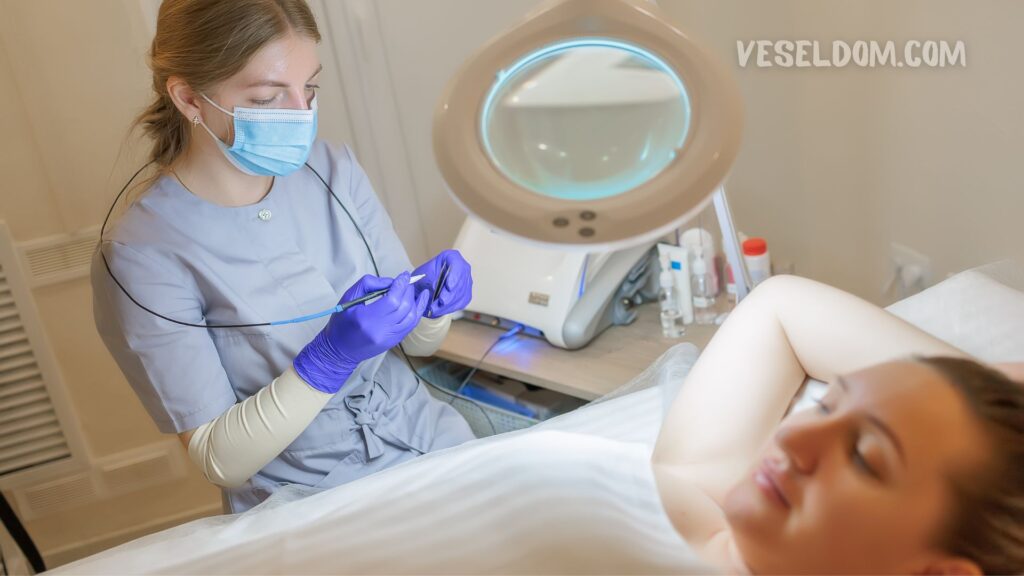
Although electroepilation has its advantages, it also has its disadvantages:
- High costs: Electroepilation is a more expensive method of hair removal compared to other methods such as waxing or laser hair removal. The procedure may require several sessions to achieve the desired result, which can increase the total cost.
- Painful: Electrolysis can be painful because it uses an electric current to destroy the hair follicle. The degree of pain depends on the sensitivity of each person, as well as on the area being treated.
- Long procedure time: Electroepilation can take longer than other hair removal methods. The procedure is performed hair by hair, which may take some time to treat a large area.
- Risk of infection: If the procedure is not performed properly, infection may be introduced. Since electroepilation uses an electric current, strict sterile conditions must be observed.
- Limited effectiveness: Electroepilation is not always effective for hair removal, especially on thin and pale skin. The hair can be located at a depth, which makes it difficult to access for the procedure.
Although electroepilation has its drawbacks, it is one of the most effective methods of hair removal with permanent results. It is important to consider all factors before deciding on a hair removal method.
What are the contraindications to electroepilation
Although electroepilation is a safe procedure, it is not suitable for all people and may have contraindications for some patients.
The main contraindications to electroepilation are as follows:
- Pregnancy. Electroepilation is not recommended during pregnancy, as the effects of electric current on the fetus are unknown.
- The presence of metal implants in the treated area. Metal implants can affect the electroepilation process and lead to unpredictable results.
- Electroepilation cannot be performed on skin that is damaged or infected. This can cause pain, discomfort and lead to further infection.
- Electroepilation is not recommended for areas with bleeding vessels. The electric current can damage them, leading to bleeding.
- Epilepsy. Electroepilation cannot be performed on patients with epilepsy, as the electric current can cause seizures.
In addition, electroepilation is not recommended on areas of the skin with moles, tattoos, piercings or common irritations, as this may lead to further complications.
On which areas of the body is it not possible to perform electroepilation?
Electroepilation is not recommended for some areas of the body, as they may be sensitive to pain or prone to complications. Here are some of them:
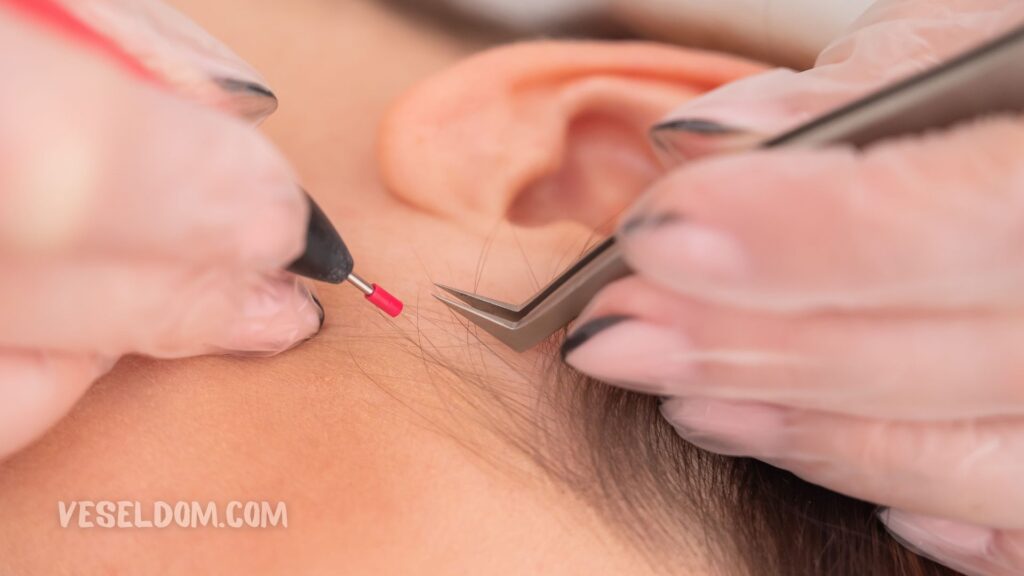
- Face: electroepilation on the face should be performed very carefully, as the skin in this area is very sensitive. On the face, hair can be removed from the eyebrows, chin, upper lip and ears.
- Breast: Electroepilation on the breast should also be done very carefully, as this area is very sensitive. On the chest, you can remove hair from the armpits, but the procedure is not recommended on the chest itself.
- Intimate area: electroepilation in intimate areas can be performed, but this procedure can be very painful. For this area, it is recommended to use the most comfortable hair removal methods for you, such as waxing or laser hair removal.
- The inner surfaces of the arms and thighs: in these areas, the skin is very thin, so electroepilation can be very painful. In these areas, it is recommended to use less painful methods of hair removal, such as waxing or epilation.
- The skin around the anus and nipples: these areas are very sensitive, so it is not recommended to perform electroepilation on these areas.
Before performing electroepilation on any part of the body, it is necessary to consult a specialist.
How to prepare for electroepilation
It is important to prepare properly before the electroepilation procedure. Following simple recommendations will help avoid the risk of skin damage and reduce pain during the procedure. Here are some preparation tips:
- Avoid using any products that can irritate or dry the skin for a few days before the procedure. These are scrubs, gels with a scrubbing effect, deodorants, etc.
- Do not visit a solarium or sunbathe outdoors, as tanning can increase the risk of inflammation and increase the skin’s sensitivity to pain.
- In order for the hair to be visible and easier to remove, it is necessary to cut it, leaving 2-3 mm of length. This issue should be discussed with a cosmetologist.
- Do not wax on the day of the electroepilation, as this may irritate the skin and increase pain during the procedure.
- Before the procedure, you should not drink alcohol, as it can increase the sensitivity of the skin.
- Do not use cosmetics before electroepilation, as they can damage the skin and increase the risk of inflammation.
- Before the procedure, visit the toilet to avoid unnecessary interruptions in the process.
How does the electroepilation procedure work?
The electroepilation procedure is usually performed by a specialist in a beauty salon or clinic. The main stages of the procedure may differ depending on the type of electroepilation, but the general principle is the same: each hair is destroyed individually.
The main stages of electroepilation:
- Preparation. The specialist cleans the skin in the area of hair removal, and also applies an anesthetic, if necessary.
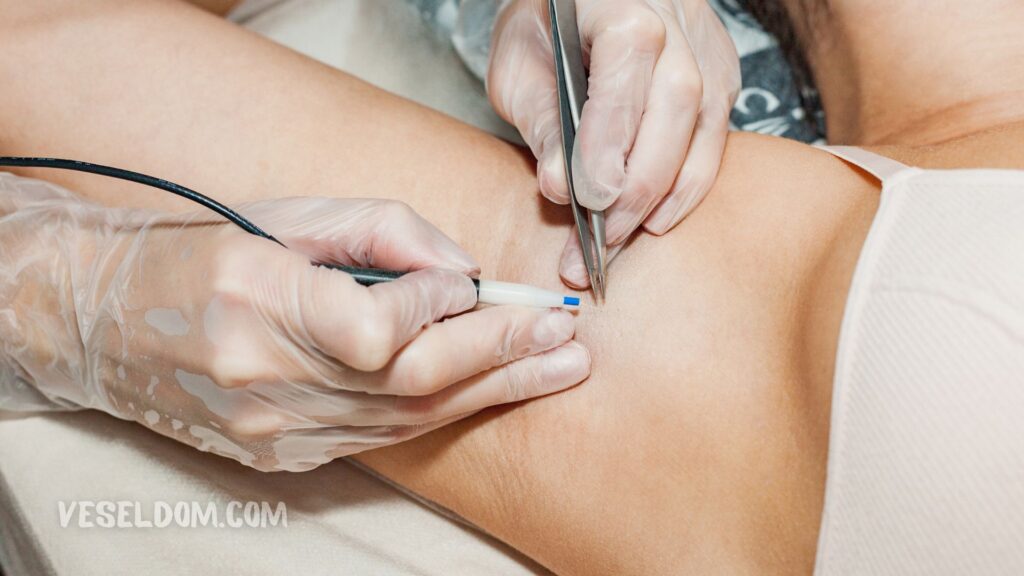
- Hair treatment. The specialist inserts a thin needle into the subcutaneous layer, exactly in the direction of hair growth. The needle reaches the root of the hair, and an electric current is applied to it.
- Destruction of the hair. The electric current destroys the root of the hair, making it unsuitable for growth.
- Hair removal. After destroying the root of the hair, the specialist pulls out the hair with tweezers.
- Repetition. This process is repeated for each hair in the epilation zone.
The duration of the electroepilation procedure depends on the area of the epilation zone and can last from several minutes to an hour. The number of sessions required to achieve the desired result also depends on the size of the epilation zone and the individual characteristics of each person.
What sensations can occur during electroepilation?
During electroepilation, different sensations may occur, depending on the characteristics of the person and the sensitivity of his skin. The main sensations that can be expected during electroepilation are described below:
- A tingling or burning sensation is one of the most common sensations during epilation. They may be more noticeable in sensitive areas of the skin, such as the armpits or bikini area.
- Mild discomfort – Some people may feel mild discomfort when the electrical current is passed through the hair follicle.
- Compression – during electroepilation, a feeling of compression may occur in the area where the procedure is performed.
- A feeling of numbness – in some cases, depending on the type of electroepilation and the individual characteristics of the person, mild anesthesia may occur.
- Sensation of smell during the procedure – depending on the type of electroepilation, a slight smell of burnt hair may occur.
In case of stronger sensations, such as severe pain or burning, it is necessary to inform the master who conducts the procedure.
How to properly care for the skin after electroepilation?
After electroepilation, the skin can be sensitive and irritated, so it is important to follow certain care rules:
- Avoid sunlight and tanning beds for 24-48 hours after the procedure. Be sure to use sun protection cream on the treated area.
- Do not use any cosmetic products on the treated skin area, except for products recommended by a specialist.
- Do not do sports, visit the pool, sauna, or immerse yourself in water for 24-48 hours after the procedure.
- If irritation occurs on the skin, you can apply cooling creams or gels.
- Do not pull the hair of the treated area with tweezers, otherwise you will worsen the result of the procedure.
- To avoid the appearance of infections, it is recommended to treat the skin with an antiseptic after each procedure.
If necessary, consult your epilator for advice on care and the use of skin soothing agents.
What can be the consequences after electroepilation?
Although electroepilation is a safe and effective method of hair removal, it can still be accompanied by some consequences, including:
- Possibility of scarring, hyperpigmentation and hypopigmentation. These effects usually disappear within a few weeks or months.
- Pain and discomfort may occur during electroepilation. However, these sensations usually disappear quite quickly after the procedure is completed.
- In some cases, rashes or tumors may appear at the treatment site, which usually disappear after a few days.
- Infection at the treatment site is possible, especially if hygiene rules are not followed.
- Some people may experience skin irritation at the epilation site, such as dryness, flaking, or irritation.
If you have any problems after the procedure, you should consult a doctor or dermatologist.
How long does the result of electroepilation last?
The result of electroepilation is long-lasting, because during the procedure, the hair follicle is destroyed, which is no longer capable of producing new hair. However, depending on the individual characteristics of the body and the epilation zone, the number of sessions may vary.
Usually, to achieve the maximum effect, you need to complete a course of 6-12 procedures. After the end of the course of electroepilation, annual correction sessions are recommended to maintain the result.

How does electroepilation differ from laser epilation?
Electroepilation and laser hair removal are two different methods of hair removal that have their own advantages and disadvantages.
Electroepilation is based on the destruction of the hair follicle using an electric current. This method is more universal, as it is suitable for any type of hair and skin. The effect of electroepilation is felt almost immediately, but it may take several procedures to achieve the full result.
Laser hair removal uses laser beams to destroy the hair follicle. This method is considered less painful and faster, but has its limitations regarding hair and skin type. Laser hair removal is most effective for dark hair on fair skin.
As for the comparison with laser hair removal, each method has its advantages and disadvantages, and the choice depends on individual needs and characteristics. Laser hair removal can be more effective for treating large areas, but it can also be more expensive and require additional preparation. At the same time, epilation may be a better choice for treating smaller areas or for those with blonde hair.
The choice between laser and electroepilation depends on the type of hair and skin, the area to be treated, the costs of the procedures and personal preferences. The decision is best made together with a dermatologist or cosmetologist, who can advise based on individual needs and risks.
Electroepilation is an effective and safe method of removing unwanted hair, which allows you to achieve long-term or even permanent results. However, like any other type of hair removal procedure, electrolysis has its own risks and limitations.
It is necessary to observe all necessary safety measures, to perform the procedure only in qualified salons with experienced masters and in compliance with all hygiene rules. Contraindications to electroepilation include certain diseases and conditions of the body, so you should consult a doctor beforehand.