
Leg waxing is a fairly popular method of hair removal. This process consists of applying a warm wax mass to the area of the leg where the hair is to be removed, and after the wax hardens, it is quickly pulled off, taking the hair with it. The advantages of waxing are that this method of hair removal is long-lasting: the wax pulls the hairs from the roots, which means that they will not appear for several weeks or even months. In addition, waxing can be less painful than other hair removal methods because the wax helps reduce pain.
Advantages and disadvantages of wax epilation
Compared to other methods of hair removal, waxing has several advantages:
- Durability. Waxing can provide hair removal for several weeks or even months, depending on the individual characteristics of the person and the technique of performing the procedure. This means that compared to a razor, which requires repeated use in a few days, waxing is a more long-term alternative.
- More efficiency. Because waxing removes hair from the roots, rather than cutting them, this method allows you to achieve greater smoothness for a long time.
- Less irritation and cuts. Compared to a razor or epilator, which can cause irritation and cuts, waxing can be less traumatic to the skin.
- Accessibility. Waxing can be done in beauty salons or at home using special wax sold in cosmetic stores.
- Reduction in the density of hair on the legs. Since waxing removes the hair from the root, it helps to reduce the density of the hair in the treated areas over time.

Although waxing has its advantages, it also has some disadvantages compared to other leg hair removal methods:
- Pain. Waxing can be quite painful for some people, especially those with sensitive skin and in certain areas of the body, such as the bikini area.
- The need for a certain length of hair. For successful waxing, the hairs must be long enough for the wax to grab them and tear them from the root. This means that you have to let your hair grow to a certain length before you can wax. Also, if the hairs are too long, they can become too thick and stiff to be successfully removed by waxing.
- Risk of skin irritation. Waxing can irritate sensitive or irritated skin. After the procedure, it is important to properly care for the skin.
- Risk of hair growing under the skin. This happens when there is insufficient preparation for hair removal, when the procedure is carried out incorrectly and the rules of care after hair removal are not followed. Also, hair can grow in people with sensitive thin skin.
- Cost. Waxing can be more expensive than some other leg hair removal methods, especially if you get it done at a beauty salon.
Preparation for wax epilation
Before waxing your legs, whether you do it in a salon or at home yourself, it is important to take a few steps to ensure the most comfortable and effective procedure. Here are some tips for preparing for waxing:
- Decide when it is convenient for you to perform the procedure. The best time to wax is when your leg hair is long enough, but not too long. This is usually 3-4 weeks after the last hair removal procedure or when the hair on the legs has reached a length of about 0.5-1 cm.
- Before waxing, it is not recommended to use lotions, creams or other skin care products on the legs, as this may reduce the effectiveness of the procedure.
- Clean the skin on your legs well before waxing using a gentle shower or bath with warm water and soap. This will help remove grease, sweat, and dirt that can complicate the procedure.
- For the best result, it is recommended to exfoliate the skin on the legs before epilation. Peeling will remove dead cells from the surface of the skin, which will allow the wax to adhere better to the hairs.
- Alcohol and coffee can make the skin more sensitive, so it is best to avoid drinking alcohol and coffee before the waxing procedure. It is also recommended to drink enough water to ensure adequate hydration of the skin.
- If you have a low pain threshold or are concerned about pain during epilation, consider using pain relievers or anti-inflammatories. But avoid taking aspirin or other drugs that can increase the risk of bleeding for 24 hours before the procedure.
- Before the procedure, make sure that the skin in the epilation area is completely dry. Wet skin can reduce the effectiveness of waxing, so make sure your skin is dry.
- If you have sunburn on the epilation area, waxing is not recommended. The sun can make the skin more sensitive and increase the risk of irritation after epilation.
- After the waxing procedure, the skin may be more sensitive to the sun, so it is very important to protect the waxing area from direct sunlight. It is recommended to apply a protective cream with an SPF factor and avoid exposure to the sun for 24-48 hours after epilation.
- Before the wax epilation procedure, it is not recommended to use depilatory creams or products with wax on the epilation area. This can make hairs less accessible to remove and also increase the risk of skin damage.
These steps will help make the waxing procedure more effective and reduce the risk of skin irritation.
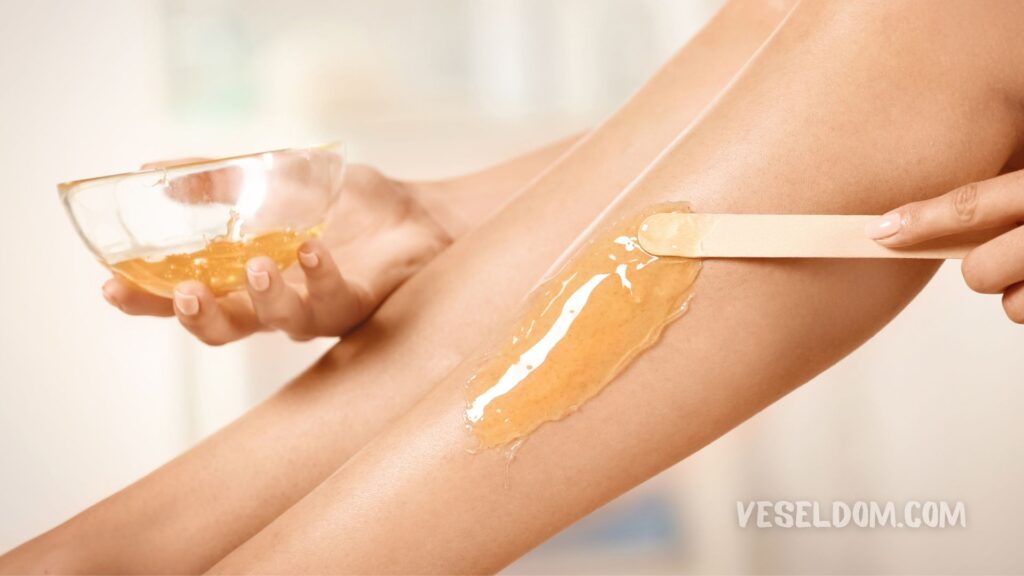
Wax epilation technique
The technique of wax epilation consists in applying heated wax to the skin and removing it together with the hairs using a strip. There are several waxing methods that can be used to remove leg hair:
- Hot wax – the wax is heated to a certain temperature, applied to the skin in a thin layer using a special spatula, and then removed with a strip. This method is considered the fastest and most effective way to remove hair.
- Cold wax – the wax is applied in strips, which are then applied to the skin and come off sharply. This method is less painful and more suitable for sensitive skin.
- Wax in cartridges – the wax is in a special cartridge with an applicator for accurate and even application on the skin. This method is reliable and effective.
- Stripless wax – the wax is applied directly to the skin, then removed without a strip, simply by hand or using a special applicator. This method is less painful, but requires more experience and skill of the performer.
During the procedure, it is important to follow the correct technique to avoid damaging the skin and ensure maximum hair removal efficiency. To do this, it is necessary to apply wax to the skin in the direction of hair growth, then sharply tear off the strip in the opposite direction of hair growth. After the procedure, it is necessary to apply a lotion or a special cream after epilation to the skin, which will soothe and reduce the risk of irritation. You can also use tea tree oil or aloe vera gel to soothe the skin. After the procedure, you should avoid using care products that contain alcohol or perfume, as well as avoid sunburn and visiting a sauna or swimming pool for 24 hours, because the skin after waxing becomes very sensitive and vulnerable.
How to do leg waxing at home?
Leg waxing can be done at home if you follow the right technique.
- Step 1: Prepare the skin.
First of all, make sure your skin is clean and dry before the procedure. You can also use a toner or mild exfoliant to remove dead skin cells and prepare it for waxing. The previous section of the article describes all the nuances of preparation that you need to know.
- Step 2: Heat the wax.
Heat the wax according to the manufacturer’s instructions. Usually, the wax is heated in a water bath or with a special wax heater. Some manufacturers allow you to heat the wax in a microwave oven. Carefully read the instructions for the wax epilation kit that you purchased in a store or from your beautician. Make sure the wax is not too hot to avoid burns.
- Step 3: Prepare the strips for waxing
As a rule, such strips are sold separately or come complete with wax. The strips are made of non-woven material or cotton, they are strong enough not to tear during the removal of wax from the hair. Size is approximately 10 by 18 cm.
- Step 4: Apply wax to your feet.
Using a special stick, apply a thin layer of wax to the legs in the direction of hair growth, according to the size of the hair removal strip. Do not apply a lot of wax, because it will be difficult to remove and you will have to wash it off with water without removing the hair. The layer of wax is thin enough to cover the hairs.
- Step 5: Place the strip on top of the wax.
The strip is laid so that the bottom end is clean, after which it is pressed against the leg. Run your hand over the strip in the direction of hair growth so that the wax and hairs adhere well to the material.

- Step 5: Separate the strip of wax and hair.
When the wax on the leg is not so hot, with a quick movement separate the strip of wax in the direction against the hair growth. This quick movement allows you to “tear off” the wax along with the hair from the skin. Be careful not to do this movement slowly, as this can cause pain and skin irritation. If you slowly remove the strip with wax, you will not get the desired epilation effect, and everything will have to be repeated again.
- Step 6: Repeat on other areas.
Continue the process on other areas of the legs until you have epilated the entire required area.
- Step 7: Apply a post-epilation product.
After epilation, apply a soothing agent to your legs. This will help soothe and hydrate the skin and prevent irritation.
- Step 8: After all procedures.
After the procedure, it is important to avoid using harsh skin care products, such as harsh exfoliators, or wearing clothing that may rub the skin.
In general, performing leg waxing at home can be a convenient and affordable alternative to professional hair removal at a beauty salon, but it is important to know the correct technique and follow certain precautions before and after the procedure to prevent pain, irritation and other skin problems.
After leg waxing
After leg waxing, it is important to follow certain guidelines to ensure the best skin care and reduce the risk of irritation. Here are some tips to help keep your skin healthy and smooth after waxing:
- Avoid warm baths or showers for 24 hours after the procedure. Also, avoid swimming in open bodies of water such as pools or oceans.
- Do not apply creams, lotions or perfumes to the treated areas for 24 hours after the procedure, as this may cause irritation.
- Do not use scrubs or other aggressive skin exfoliants for 48 hours after the procedure, as this may increase skin irritation.
- Do not wear tight clothes for at least a day to avoid friction and skin irritation.
- If you feel discomfort or pain on the treated skin area, you can apply a cold compress to reduce irritation.
- For 24 hours after epilation, avoid stress on the skin, such as physical exercises, sports competitions, visits to the sauna or swimming pool.
- Avoid sunburns and UV rays after waxing, as they can increase the risk of skin irritation and damage.
- Make sure you drink enough water to keep your skin healthy after waxing.
It is recommended to apply a moisturizing lotion or oil to your feet to ensure proper skin care and prevent dryness and flaking. In addition, you should avoid the use of aggressive cosmetics that can irritate the skin, such as scrubs, hard soaps and alcohol lotions.
If pimples or rashes appear on the skin, it is necessary to avoid bleaching or squeezing them to prevent infection. Instead, you can apply aloe vera or calendula, which have a soothing and anti-inflammatory effect, to the problem skin area.
Finally, do not forget about the regularity of the waxing procedure to ensure the best result. It is usually recommended to repeat the procedure 4-6 weeks after the previous epilation, when the hairs have grown back to a sufficient length for waxing.
When it is not possible to wax the legs
Although leg waxing is safe for most people, there are some circumstances where it may not be recommended:
- If there are wounds, burns, irritations or other open skin injuries on the legs.
- If you are taking medicines that can make your skin more sensitive or reactive, such as retinoids, blood thinners or steroid medicines.
- If you have an allergic reaction to wax or other components used in the waxing procedure.
- If you are taking medicines that increase the risk of bleeding, such as aspirin or anticoagulants.
Before performing leg waxing, it is recommended to consult a qualified cosmetologist or doctor, who will be able to assess the condition of your skin and find out whether this procedure is suitable for you.